

[🚨 URGENT: Application Deadline is TODAY]
Before I share my journey to Washington D.C., I have an urgent message. The program that made all of the following experiences possible—the Korea-America Student Conference (KASC)—is closing applications for Korean delegates TODAY (Jan 28, EST).
If you want to spend your summer debating the future of US-Korea relations in San Francisco, New Orleans, and D.C., do not miss this chance.
🗓 Program Dates: July 25 – August 12, 2026
🕒 Application Deadline: January 29, 2026, 13:59(KST)
👉 Apply Here Immediately (More details at the bottom of this email)
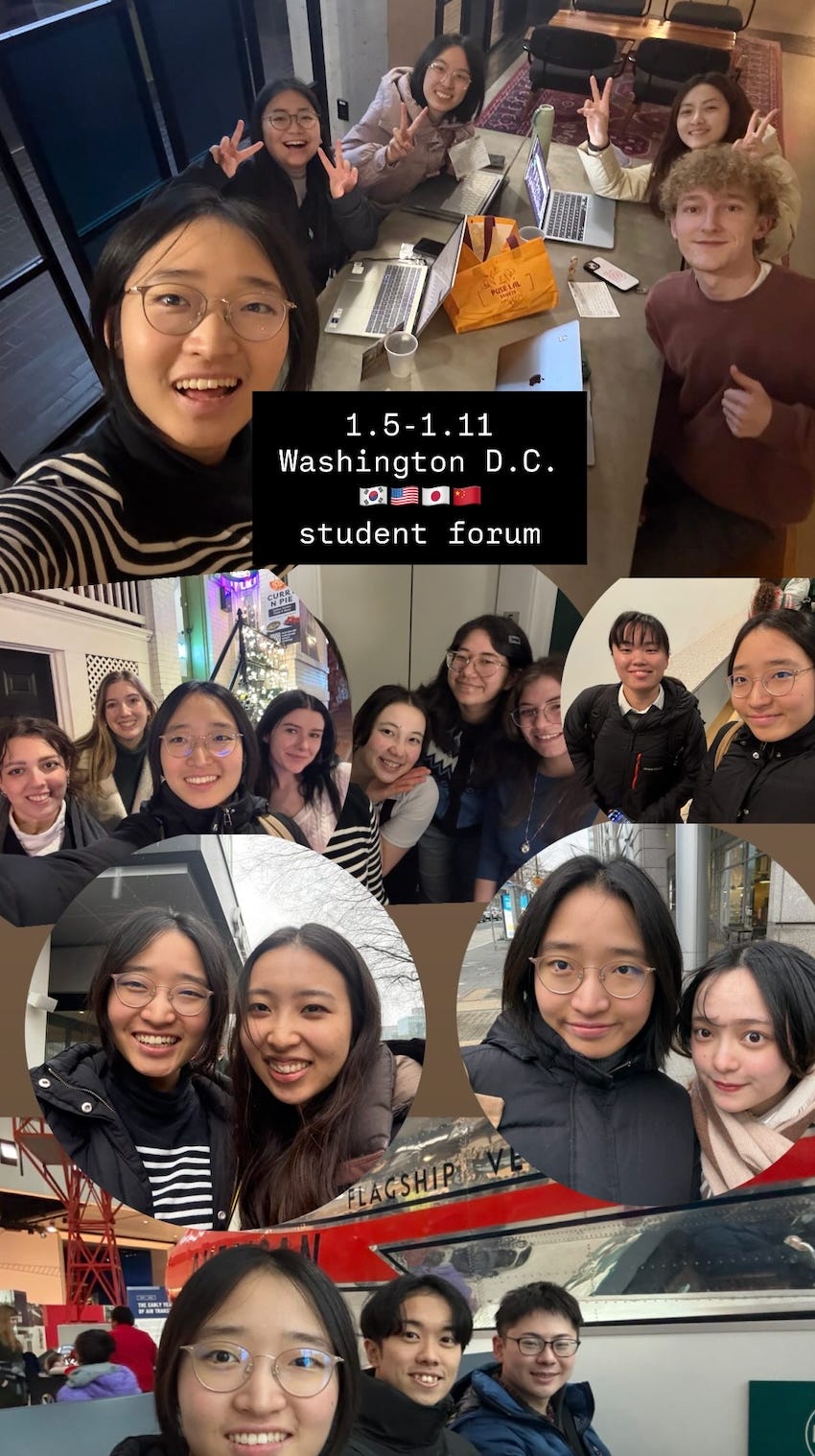
I visited the capital of the United States.
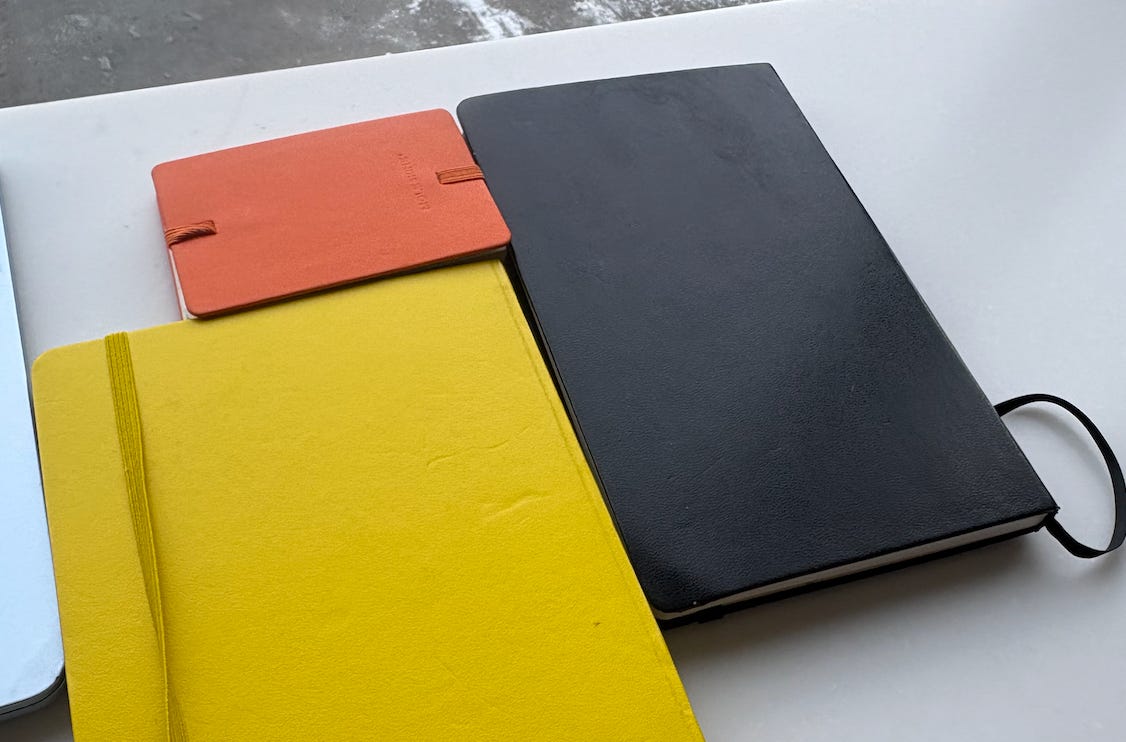
I faced the final page of the black notebook I had been using all throughout December, and at a bookstore in Washington, I purchased a new, vibrant yellow notebook.
It has already been two weeks since my trip to Washington. Two weeks ago, I arrived at Penn Station at 10 PM. Carrying a large suitcase, I struggled up the stairs to take the subway, eventually arriving at my dorm in New York, a 10-minute walk from the Brooklyn Bridge. Inside that deep blue suitcase were one suit set, a few turtlenecks, pajamas, two books, and two pairs of shoes: one pair of indoor slippers, and the brown dress shoes I bought in Oxford, UK.
The navy suit jacket and charcoal slacks that roamed every corner of Oxford with me last March breathed in the air of Washington, the U.S. capital, ten months later.
What is the Korea-America Student Conference (KASC)?
It is a Korea-U.S. youth exchange program that started just one week after I returned from Japan in early July last year. For a total of three weeks—10 days in Seoul and 10 days in New York—I toured places like Camp Humphreys (USFK), the International Political Science Association, the War Memorial of Korea, UN Headquarters, the Asia Society, and the Council on Foreign Relations (CFR) with 20 friends. Towards the end of the three-week schedule, they were recruiting the Executive Committee (EC) to run the following year’s conference. I applied, thinking it would be quite interesting to plan this kind of total “experience” myself.
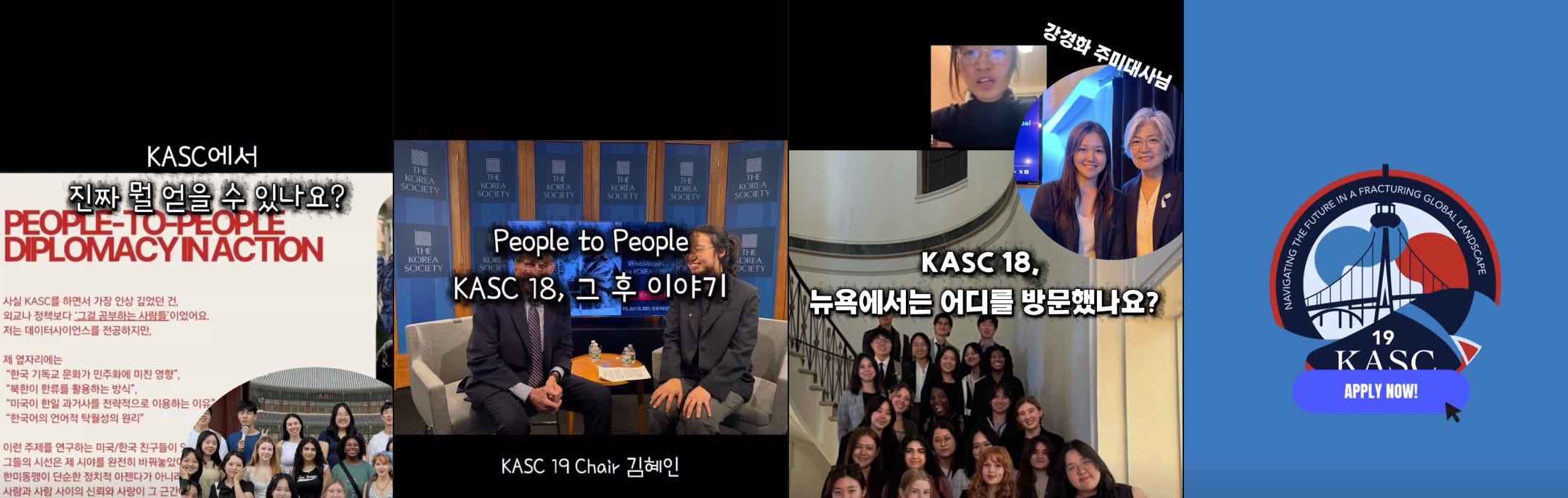
In the end, I took on the role of an EC member for KASC along with three American friends, and we are currently preparing for the 19th KASC to be held this year. This year, we plan to visit San Francisco, New Orleans, and Washington D.C. over three weeks. The Executive Committee handles everything from recruiting next year’s participants to selecting venues, inviting speakers, and managing the budget. ISC plays the role of supervising and advising us. I am currently in charge of recruiting Korean delegates and inviting Korean speakers. (This year conference is due today!, check out my korean reels haha)
What is the Trilateral Forum?
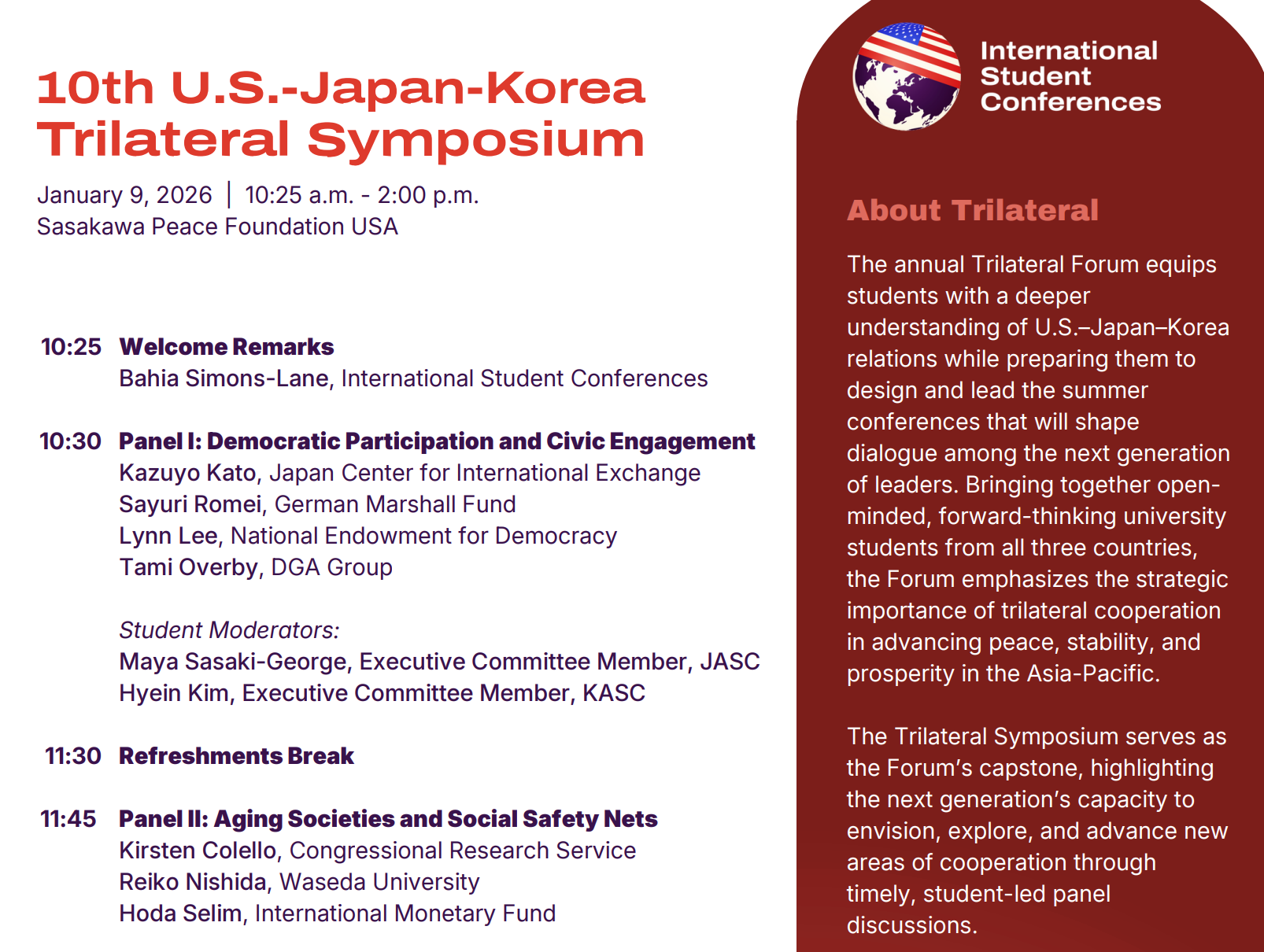
Under the umbrella of ISC, there is not only KASC but also JASC (Japan-America Student Conference), which marks its 78th year, and CHASC (China-America Student Conference), which is being held for the 6th time this year. Every January, ISC gathers the executive committees of these three conferences in one place for a week-long forum. Here, the executives gain academic learning and networking opportunities while discussing how to prepare for the forums to be held in the summer.
Historically, this forum has been conducted under the theme of the Trilateral Alliance (Korea-US-Japan). Although Chinese friends participate, the main agenda of the forum has been the alliance of the three countries. (I heard it is scheduled to change to an East Asia Forum starting next year.) This year, there were American friends, Japanese friends, and Chinese friends, but I was the only Korean.
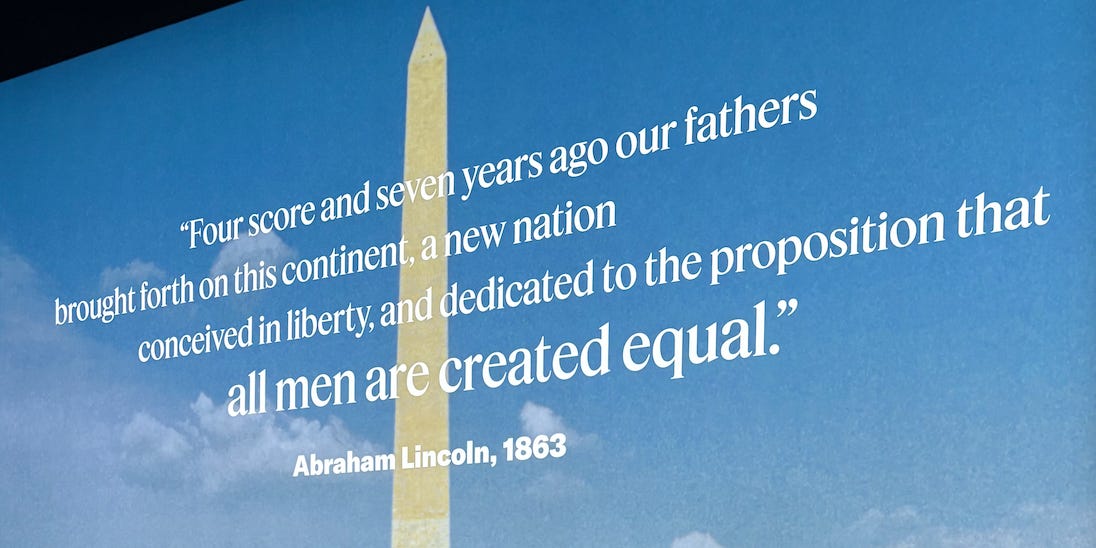
Now, let’s go back to the first day in Washington.
“I think you’ll have to take on the role of moderator this Friday.”
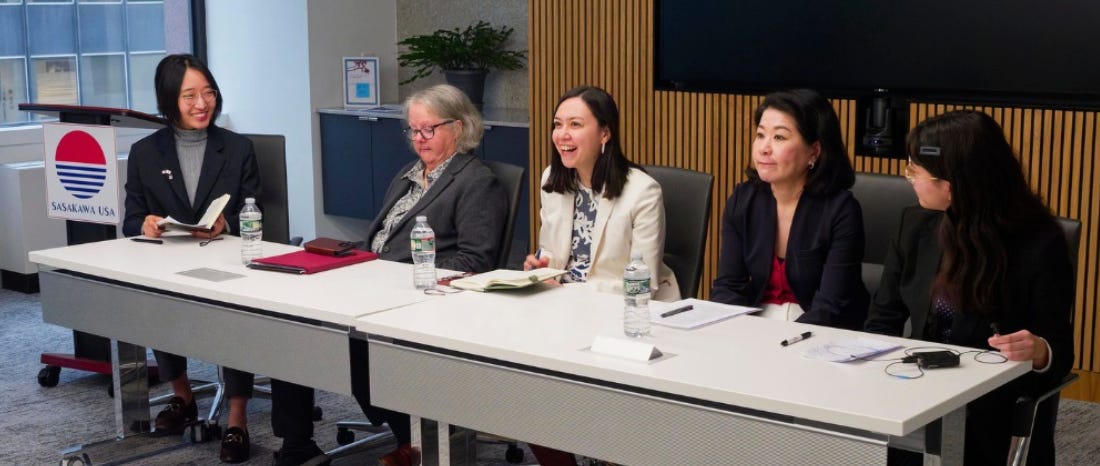
On the first day of the program, I arrived at the Transpacific Future Center. And then, I heard some bombshell news. For the Final Forum held on Friday, four experts were set to appear as panels on the topic of ‘Democratic Participation and Civic Engagement.’ One moderator was needed from each country, and since I was the only Korean, the role naturally fell to me. A moderator who asks questions to the panelists, leads the session, and manages speaking time.
‘Huh?’
I had a brief mental breakdown, but immediately switched my mindset to, ‘Well, let’s just give it a try.’ Fortunately, ISC provided a checklist: researching speaker backgrounds, preparing questions, and time management strategies. Luckily, I was able to prepare with four other friends. In a room packed with old books about Japan and the U.S., I scoured the backgrounds of the speakers with my American and Japanese friends.
Looking at the profiles of the speakers, their expertise was distinct. Sayuri Romei is a researcher on Japan’s nuclear policy and the US-Japan alliance; Tami Overby is a negotiator who led the KORUS FTA while helping US companies enter Asia for 35 years; Lynn Lee manages East Asian democracy and human rights programs at the National Endowment for Democracy (NED); and Kazuyo Kato leads US-Japan policy dialogue as the Executive Director of the Japan Center for International Exchange (JCIE).
The problem was how to melt their expertise into a single topic. How to naturally draw out the perspectives of Korea, the U.S., and Japan, comparative views, and the direction of cooperation. It was not as easy as I thought.
Connect the dots
While talking with a team member who went through Keio High School and is currently studying Political Science at Keio University, I suddenly remembered the ‘PLURALITY’ lecture I attended at Keio University in Japan last May. It was a gathering where Taiwan’s Audrey Tang, young Japanese politicians, and professors discussed the democracy that AI will change. I reopened the notes I took at Keio. How AI is used in listening to public opinion in Japan, why diverse participation is important in democracy... The points I desperately needed were written right there.
Recently, while organizing my records from Japan, I wondered, ‘Why did I even go there?’ Looking at my scattered notes, I wondered if it had been a waste of time. I felt frustrated with myself for not being able to clearly explain why I had just “dipped my toes” into so many different fields. (Japan records are nearly 100 pages, US records are 200... Ahhh... I feel like I’ll spend all of early January just organizing records...)
But today, I realized it with certainty. ‘Ah, it really is all useful.’
Knowing that penetrating questions are needed to avoid dealing only with superficial content, I decided to prepare whenever I had a spare moment the next day. Although it was my first time doing public facilitating, I thought it would be more fun than I expected.
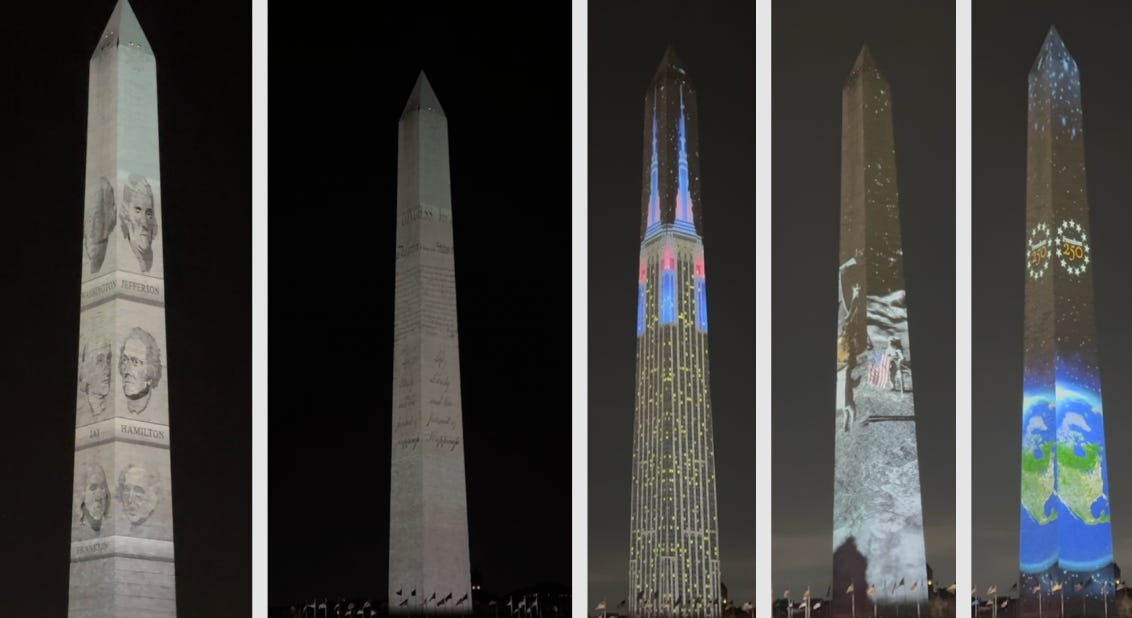
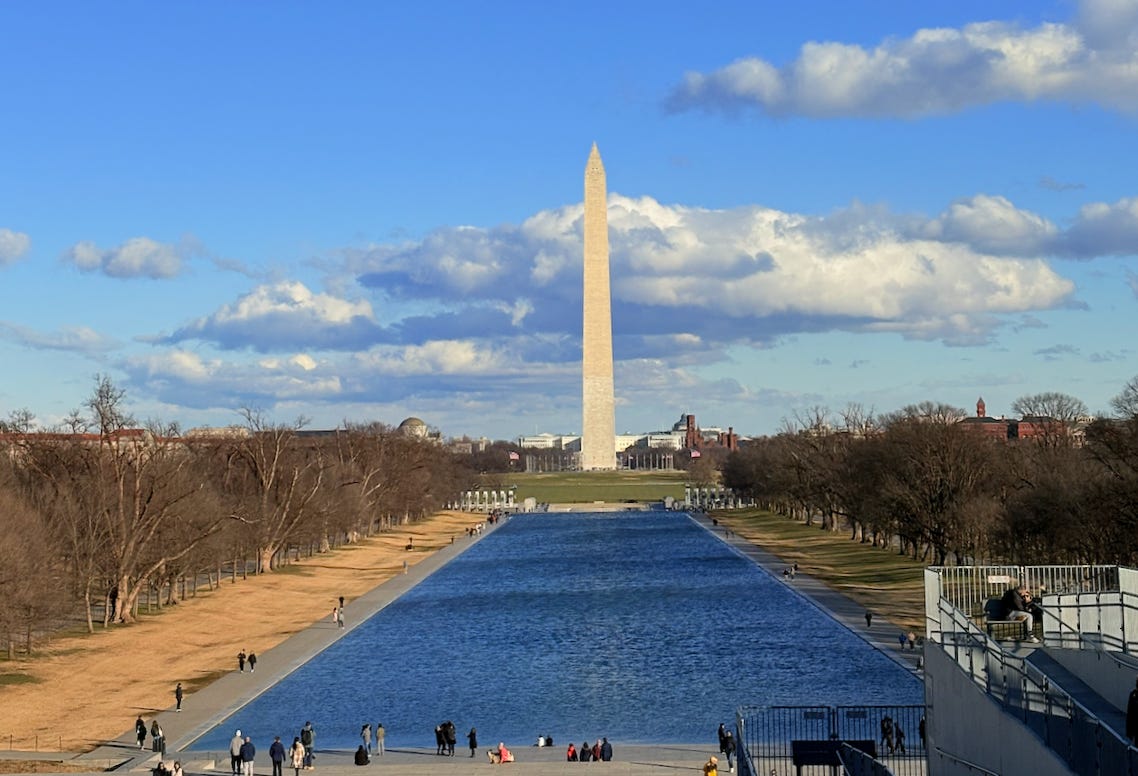
In the evening, I went to the central tower in Washington (Washington Monument) with my KASC EC friends. The America 250th Anniversary Light Show. History from 1776 to the present unfolded along the tower. The U.S. Constitution, civil rights movements, the Wright brothers’ airplane, rockets, and even the internet. It was clear at a glance what America is proud of. It was the best ‘official’ learning material to glimpse their National Identity.
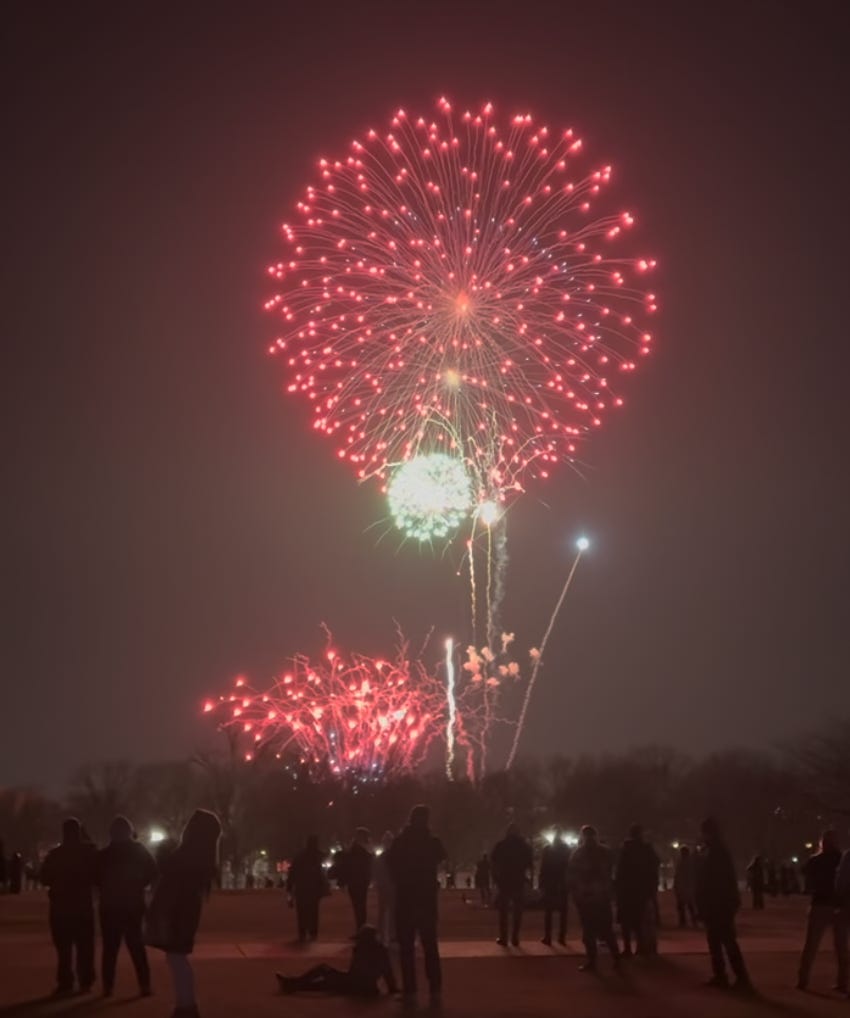
The moment the U.S. national anthem rang out, fireworks exploded in the sky on the opposite side. People gathered in the vast park all looked up in unison toward the sound of the booms. It was the first time since Ipselenti (university festival) that I had seen fireworks that close. Red and blue flames filled the sky, and for about 5 minutes, I couldn’t close my mouth. I captured that brilliant scene with my own two eyes
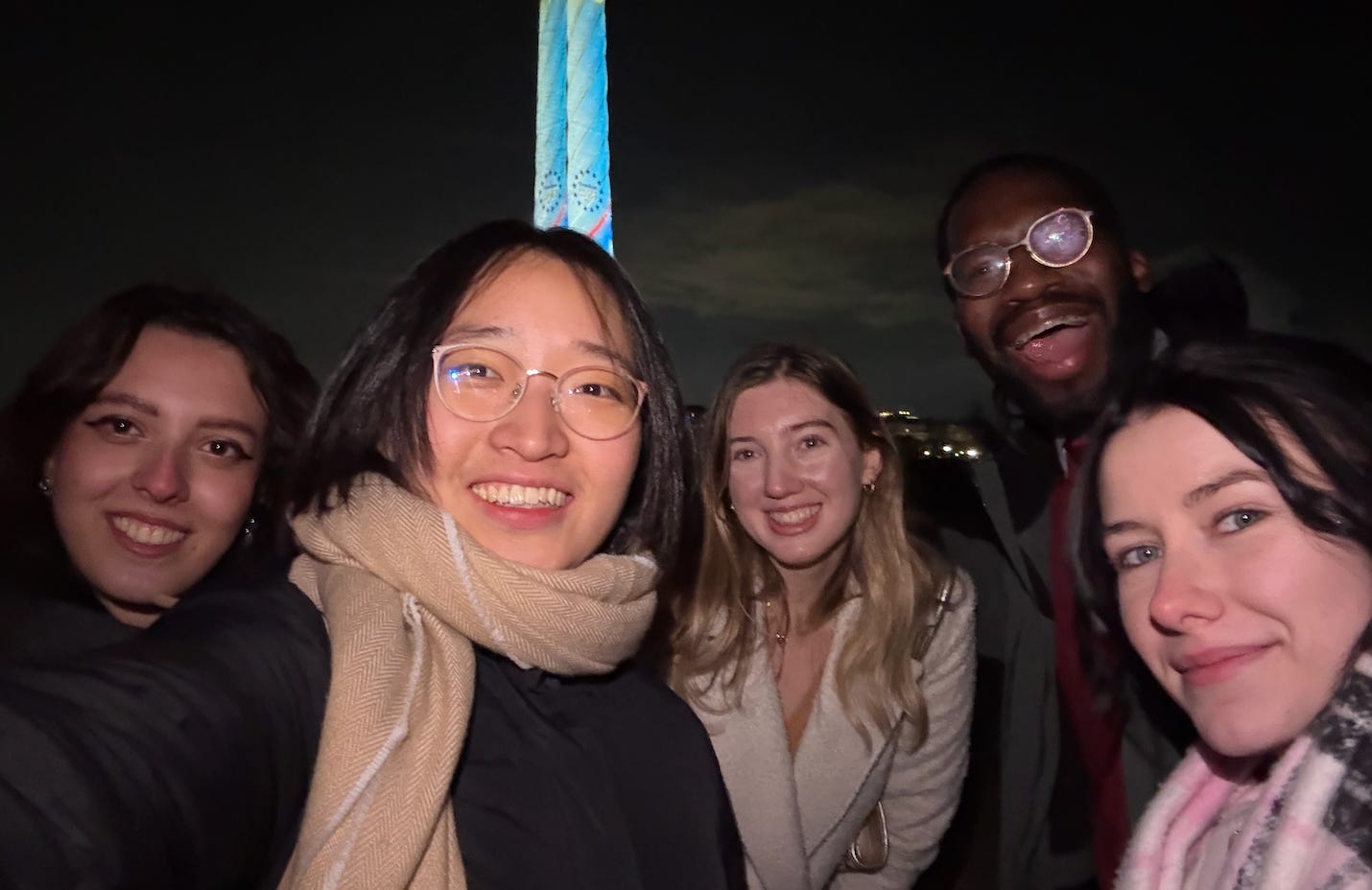
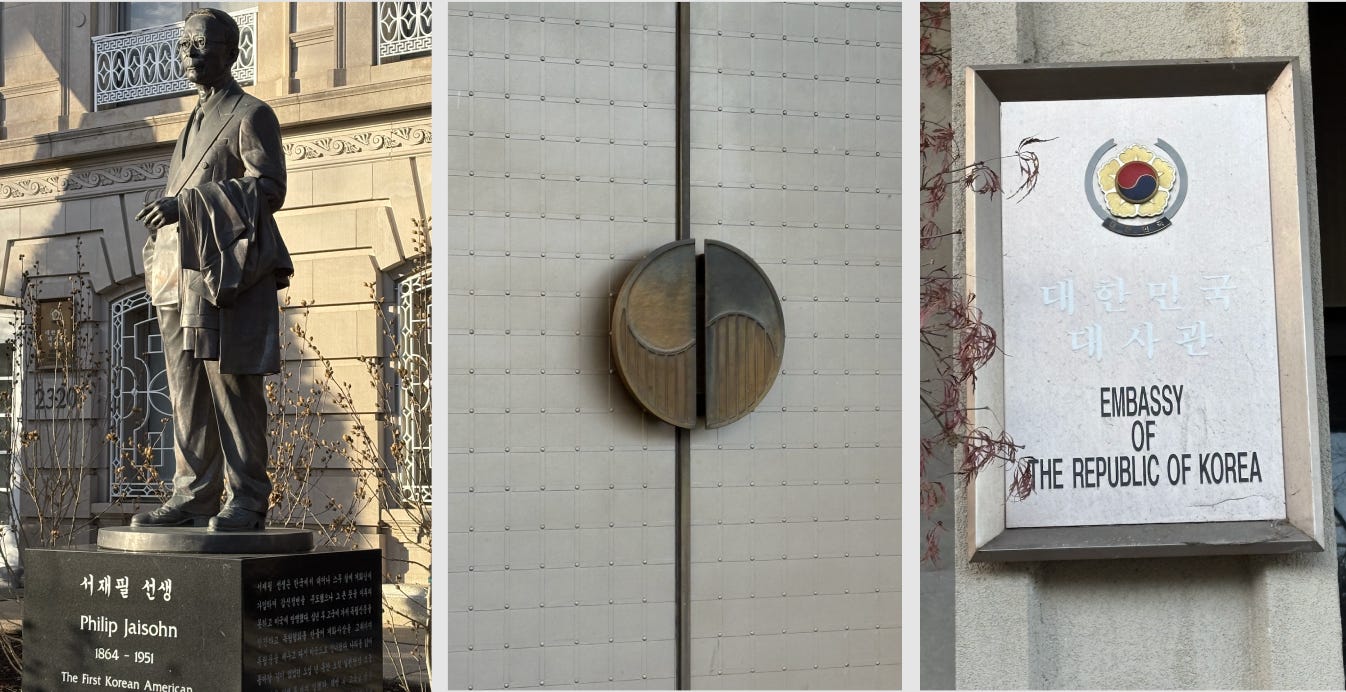
The 5-day schedule flew by. In between sessions, we visited key institutions including the U.S. Department of State, the Embassy of Japan, the Korean Cultural Center, the Korea Economic Institute (KEI), and The Asia Group. We also explored the National Museum of Asian Art, the National Archives, and the National Air and Space Museum.
I will cover the stories from these visits in the next episode.
Now, let’s go to the final day of the forum.
Friday morning, we headed to the Sasakawa Peace Foundation building. I was in charge of the first session. The topic was Democratic Participation and Civic Engagement. In fact, I had prepared about four questions in advance and sent them over. However, the panelists told me to freely throw out any questions that came to mind during the session, so I wrote down notes while racking my brain as usual. I tried to capture where the conversation was heading, how this topic related to our main theme, and what we were currently missing.
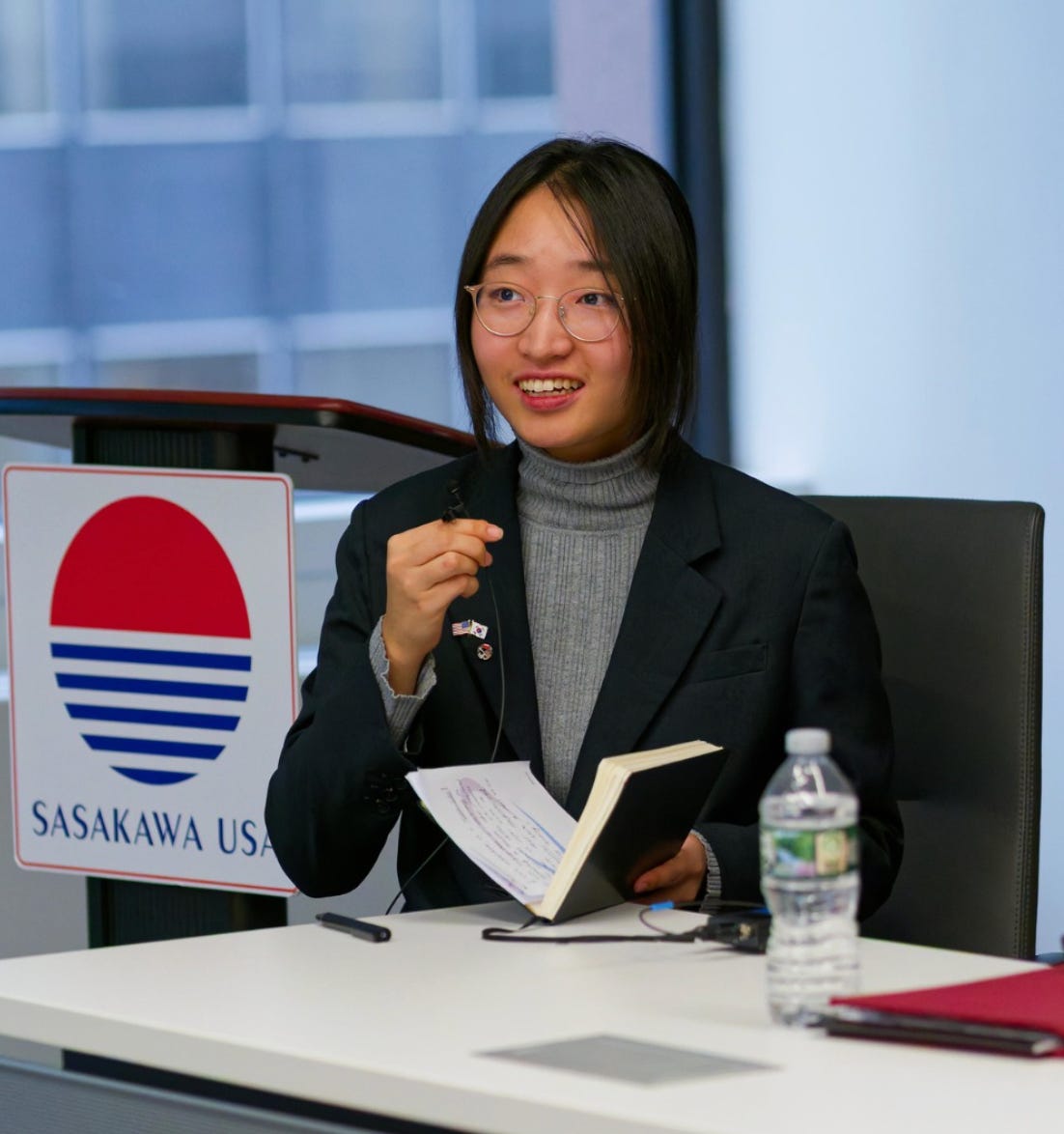
As the conversation flowed toward the importance of democratic civic education, I wanted them to explain further what exactly that civic education is. Not at a methodological level like how to vote or how to participate in politics, but I was curious about something that the education itself—that is, what citizens in a liberal democracy should strive to possess. So, I connected this to the events of Korea’s modern history mentioned by a previous panelist and asked a question.
“Yes, I have one follow-up question. Earlier, you mentioned the history of the Korean War and the development process of Korea and Japan. The other two panelists also mentioned the importance of democratic civic education. So, I am curious about how historical facts, such as the history of democracy, the Korean War, or 20th-century modern history, can be integrated into civic education for democracy. Because I thought that civic education is not just about learning ‘how to vote’ or ‘social structures,’ but learning how democratic values have been protected over the past century.”
While I asked “How to integrate history and democratic values into education,” the panelists expanded their answers to the realistic difficulties of history education and practical educational methodologies according to their respective fields of expertise.
1. Tami Overby (Emphasizing Differences in Historical Perception and Responsibility of Voting)
Realistic Limits of History Education: Korea and Japan have many areas where they do not agree on history (what happened), making it tricky to integrate into education. (e.g., Mentioned the extreme difference in perception regarding past history between the two countries).
Acknowledging Cultural Diversity: We must acknowledge that we are different. America’s strength is its diversity as a nation of immigrants, and it is regrettable that this is weakening recently.
Ultimately a Issue of ‘Participation’: While historical context is important, the core of education is making young people realize that “voting affects my life and assets.” (Shared an anecdote about teaching her nephew the importance of voting using inheritance as leverage).
2. Kazuyo Kato (Shifting from System Learning to ‘Dialogue and Experience’)
Problems with Existing Education: Japanese civic education focuses too much on learning formal Systems, such as how the government is formed.
New Integration Method: To learn history or values, Interaction outside the classroom is necessary.
Expanding opportunities for Dialogue to share opinions with peers rather than simple lectures.
Experiential learning such as Mock Diet and mock elections.
It is more effective to directly experience the scene of democracy through NGO internships or volunteering than to simply memorize history.
3. Sayuri Romei (From Passive Peace Education to Active Security Education)
Lack of Critical Thinking: Japanese students culturally tend to listen passively without asking questions or giving opinions during class. Training to break this and speak actively is needed.
Need for Change in History Education: In the past, Japanese education focused on Peace Studies teaching the ‘horror of war,’ but this alone is insufficient.
Integrating Reality Awareness: By making them face the geopolitical reality happening now, such as North Korea’s threats and Russia’s invasion, we must teach by connecting how past history affects my safety and democracy in the present. (Emphasized reading the newspaper every day).
As I facilitated the panel discussion as a moderator for the first time, I realized that I actually enjoy this process quite a bit. Speaking on behalf of a country is always something to be cautious about, but speaking logically and coherently about Korea’s position within the scope of my knowledge was a beneficial experience. It was also a strange feeling to gather the four countries I will visit during my college life at Taejae in one place to talk. The story that China is also achieving a form of democracy was also interesting.
What on earth does it mean to understand each other?
In the next newsletter, I will also write about the story of my solo GET tour in Washington. After learning about Japan’s national identity, I found that even when I come to Washington, I always walk around pondering the intention of the place, reviving that experience.
[🚨 URGENT: Application Deadline is TODAY]
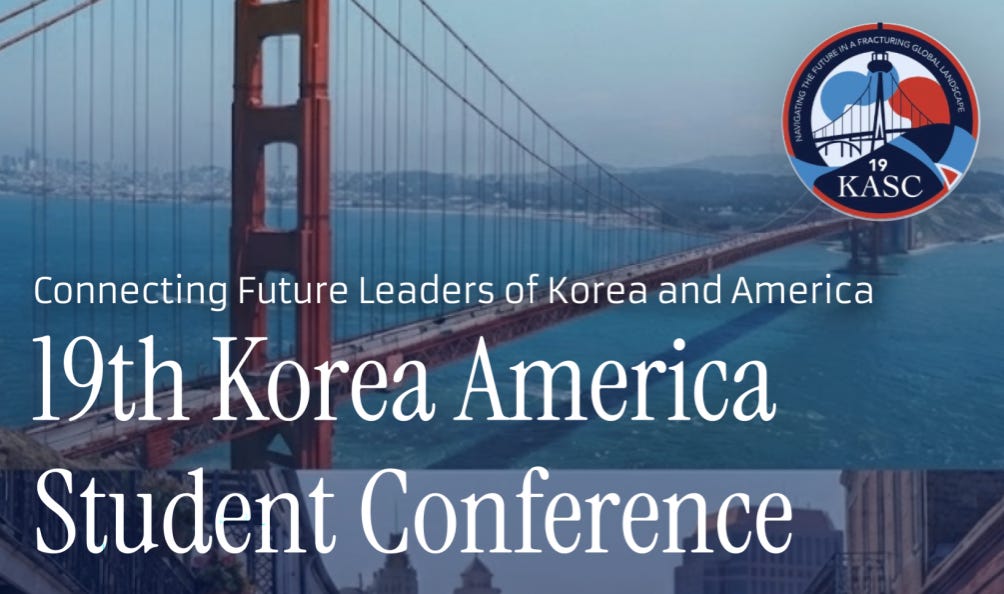
📣 19th Korea-America Student Conference (KASC) is now recruiting delegates for its 2026 program!
KASC is a three-week academic and cultural exchange that brings together students from Korea and the U.S.—including Korean, Korean-American, and international students studying in either country—to explore the future of the U.S.–Korea relationship across San Francisco, New Orleans, and Washington, D.C.
Participants engage in lectures, discussions, and research projects on topics like diplomacy, economy, technology, and culture, and present their work at the Final Forum in D.C.
🗓 Program Dates: July 25 – August 12, 2026
🕒 Application Deadline: January 29, 2026, 13:59(KST)
🔗 Apply here: https://form.jotform.com/KASC_ISC/19th-kasc-application
🌐 Learn more: https://iscdc.org/kasc
Instagram: @kasc_usofficial